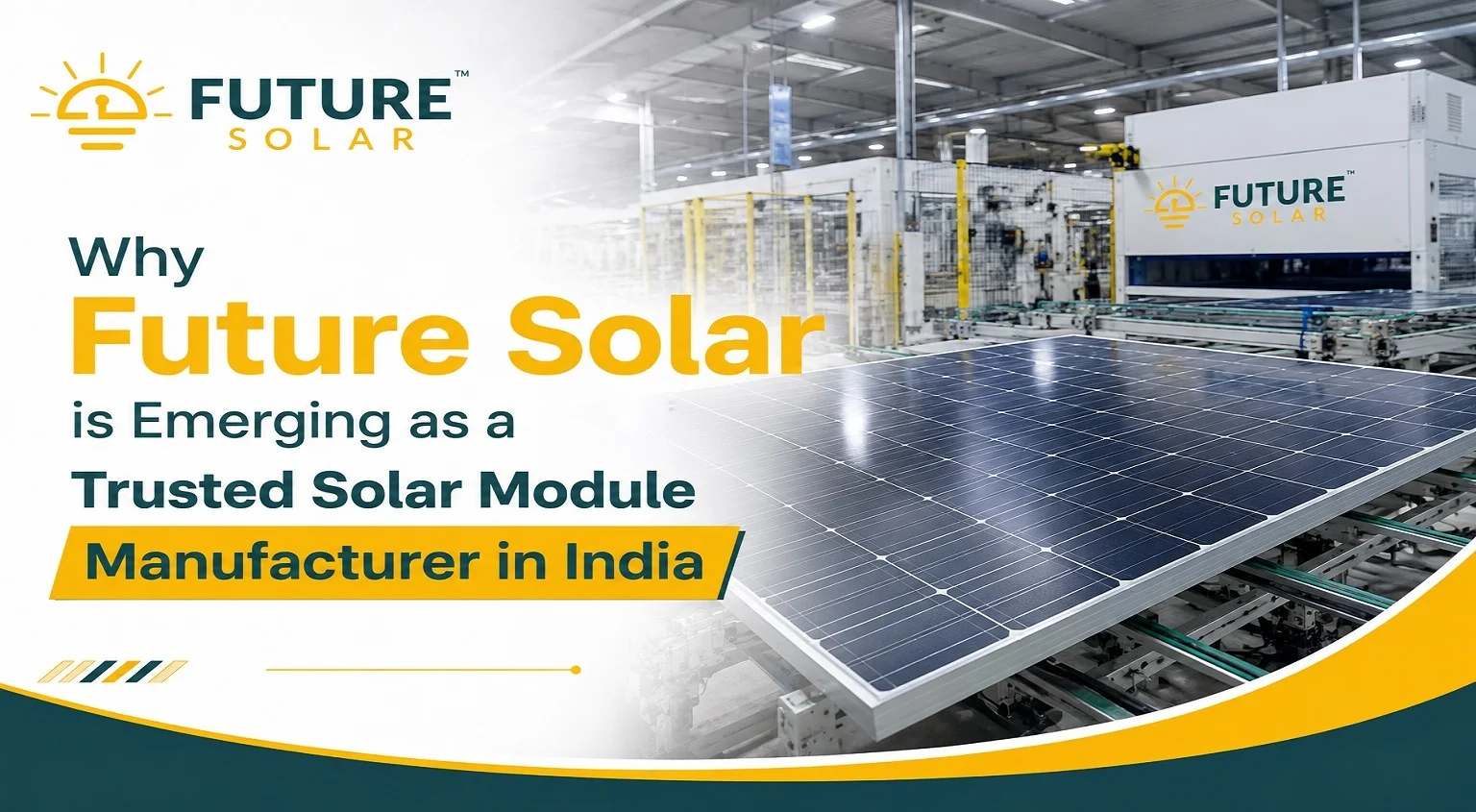
India is consistently evolving as a core hub for renewable and solar energy. Over the past years, the expansion of major solar panel manufacturing companies in India has significantly boosted India’s presence in the green energy industry.
the expansion of major solar panel manufacturing companies in India has significantly boosted India’s presence in the green energy industry. The solar companies in India have been in demand and ranked at the top due to their advanced technology and continuous innovative growth.
Having an understanding of the detailed growth of solar panels becomes important to take a clearer and closer look at the methodologies of manufacturing solar panels, the technology used to design them, and how constant changes and innovations have been affecting their future.
Growth of Solar Manufacturing in India
The Indian government has encouraged local manufacturing with initiatives such as PLI (Production Linked Incentive) and ALMM approvals. This has spurred greater market participation and expansion.
As a result:
- India now has a strong base of solar module manufacturers
- Dependence on imports is gradually reducing
- Quality standards are improving significantly
- Export potential is growing year by year
This expansion has created a competitive ecosystem where every solar panel manufacturing company in India is focusing on better efficiency and cost-effectiveness.
How Solar Panels Are Manufactured
The process of solar panel manufacturing may sound technical, but it follows a structured and well-defined sequence. Each step plays a key role in ensuring performance and durability.
1. Silicon Processing
The journey begins with silicon, which is the core raw material. It is extracted and purified to create high-quality silicon ingots.
- Silicon is melted and shaped into blocks
- These blocks are then sliced into thin wafers
- Wafers act as the base for solar cells
2. Solar Cell Production
This is where the actual energy conversion capability is created.
- Wafers are treated with chemicals to improve conductivity
- A thin anti-reflective coating is applied
- Metal contacts are added to capture electricity
These treated wafers become solar cells capable of generating power from sunlight.
3. Module Assembly
Solar cells are then assembled into panels.
- Cells are arranged in a grid-like pattern
- Encapsulation is done using EVA sheets for protection
- A glass layer is added on top for durability
- A backsheet is placed for insulation
This layered structure ensures that panels can withstand weather conditions for decades.
4. Framing and Junction Box Installation
Once the panel structure is ready:
- Aluminium frames are attached for strength
- A junction box is installed for electrical connections
This step prepares the panel for real-world installation.
5. Testing and Quality Check
Before reaching the market, panels go through strict testing.
- Performance testing under standard conditions
- Durability and stress testing
- Quality inspection for defects
Reliable Indian solar panel manufacturing companies ensure that only certified and tested panels are delivered to customers.
Technologies Used in Modern Solar Panels
Technology plays a major role in improving efficiency and lifespan. Today’s solar panels are far more advanced than earlier models.
Some widely used technologies include:
- Monocrystalline Panels – Known for high efficiency and sleek design
- Polycrystalline Panels – Cost-effective and widely used
- PERC Technology – Enhances energy output by improving light absorption
- Bifacial Panels – Generate power from both sides
A leading solar panel manufacturing company in India focuses on adopting these technologies to deliver better performance.
Innovation Driving the Industry Forward
Innovation is what keeps the solar sector evolving. Indian manufacturers are continuously investing in research and development.
Key areas of innovation include:
- Higher efficiency panels with lower degradation rates
- Smart solar systems with monitoring capabilities
- Improved storage integration with batteries
- Lightweight and flexible panel designs
These advancements are helping Indian solar panel manufacturing companies meet both residential and commercial energy needs more effectively.
Role of Companies Like Future Solar
While manufacturing is important, the real impact is created when high-quality panels are combined with proper system design and installation.
Future Solar focuses on bridging this gap by:
- Offering reliable and efficient solar solutions
- Working with trusted manufacturing partners
- Providing customized system designs
- Ensuring smooth installation and long-term support
Their approach ensures that customers not only get access to quality products but also benefit from proper implementation.
Challenges in Solar Manufacturing
Despite strong growth, the industry still faces a few challenges:
- High initial investment in the manufacturing setup
- Dependence on raw material supply chains
- Need for continuous technological upgrades
- Pricing pressure due to global competition
However, with strong policy support and increasing demand, these challenges are gradually being addressed.
The Indian solar manufacturing industry has come a long way. It has now become an impactful tech-enabled industry. With the consistently growing innovation and government initiatives, the future of solar panels is promising and bright.
Selecting the right Indian solar panel manufacturer is important to ensure sustainability and efficacy. However, this makes it essential to depend on reliable and innovative brands like Future Solar. This ensures the system is specifically designed and installed as per your needs.
As India is embracing a greener and cleaner future, solar manufacturing will be an important part of enabling this revolution.